
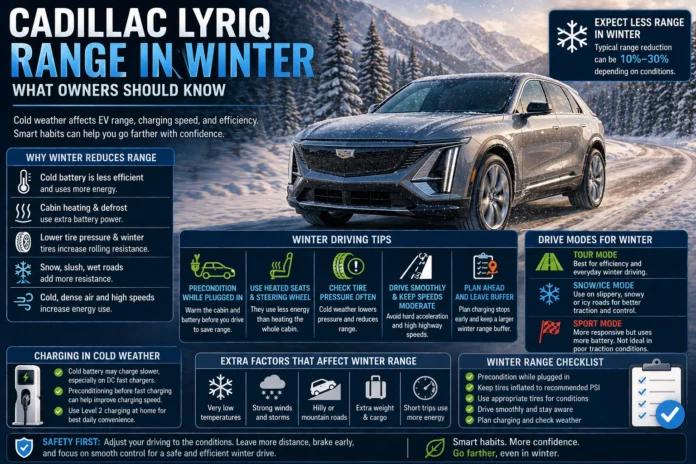


The Cadillac Lyriq is a premium electric SUV with strong range, smooth performance, and a quiet luxury driving experience. But like every electric vehicle, its real-world range can change when temperatures drop.
Winter weather affects EVs in several ways. Cold air, battery temperature, cabin heating, road conditions, tire pressure, snow, slush, and driving speed can all influence how far the Lyriq travels on a charge. This does not mean the Lyriq is bad in winter. It simply means owners should understand how cold weather changes battery usage and charging behavior.
If you are learning how the Lyriq’s drive modes affect efficiency, you can also read Do the Driving Modes in Cadillac Lyriq Offer Different Ranges or Battery Usages?
Table of Contents
Quick Answer: Does Winter Reduce Cadillac Lyriq Range?
Yes, winter can reduce Cadillac Lyriq range. Cold weather can make the battery less efficient, while cabin heating and defrosting can use extra energy. Snow, slush, wet roads, winter tires, and lower tire pressure can also increase battery usage.
The exact range loss depends on temperature, trip length, road conditions, charging habits, and driving style. Short winter trips may feel less efficient because the vehicle uses energy to warm the cabin and systems. Longer trips may become more efficient once the vehicle is warmed up, but cold air and higher energy demand can still affect range.
The best way to protect range in winter is to precondition while plugged in, use Tour Mode on clear roads, use Snow/Ice Mode when traction matters, keep tires properly inflated, and avoid aggressive driving.
Cadillac Lyriq Winter Range Factors
| Winter Factor | How It Affects Range | What Owners Can Do |
|---|---|---|
| Cold Battery | Battery may use energy less efficiently | Precondition before driving |
| Cabin Heating | Heat and defrost use battery energy | Warm cabin while plugged in |
| Snow/Ice Mode | Helps traction, not maximum range | Use when roads are slippery |
| Tire Pressure | Cold weather can lower pressure | Check pressure regularly |
| Winter Tires | Can increase rolling resistance | Use proper tires only when needed |
| Highway Speed | High speed uses more energy | Keep speed steady and moderate |
| Snow and Slush | Adds resistance on the road | Allow more range buffer |
| Charging Speed | Cold battery may charge slower | Plan charging stops earlier |
Why Cold Weather Affects EV Range
Cold weather affects electric vehicles differently than gas-powered vehicles. In an EV, the battery powers the motor, cabin heat, electronics, and other systems. When temperatures are low, the battery may not operate as efficiently as it does in mild weather.
The vehicle may also use energy to warm the cabin and manage battery temperature. This extra energy demand can reduce the range shown on the dashboard and the distance you get from each charge.
Winter air is also denser, which can increase aerodynamic drag at highway speeds. Wet roads, snow, and slush can add rolling resistance. All these small effects add up.
That is why Cadillac Lyriq owners should expect some seasonal range variation.
Battery Temperature Matters
Battery temperature is one of the most important winter range factors. EV batteries work best within a comfortable temperature range. When the battery is very cold, it may need more energy to deliver the same performance.
The Lyriq’s battery management system helps protect the battery and support operation in different conditions. However, cold temperatures can still affect efficiency.
If the vehicle is parked outside overnight in freezing weather, the first part of the drive may use more energy. This is one reason preconditioning can help.
A warmed battery and cabin can make the beginning of a trip more efficient and comfortable.
Precondition the Cabin While Plugged In
Preconditioning is one of the best habits for Cadillac Lyriq winter driving. It means warming the cabin before you start driving, ideally while the vehicle is still connected to a charger.
When the Lyriq is plugged in, some of the energy used for cabin warming can come from the charger instead of only from the battery. This helps preserve driving range after you leave.
Preconditioning also improves comfort. Instead of starting your trip in a cold cabin and immediately using maximum heat, the vehicle is already warm when you get in.
This is especially useful for short winter trips, where heating energy can take a larger share of total battery use.
For more range-saving habits, read How to Get More Range From a Cadillac Lyriq
Use Heated Seats and Steering Wheel Wisely
In winter, heating the entire cabin can use more energy than warming the driver and passengers directly. Heated seats and a heated steering wheel can help you feel comfortable without relying only on high cabin heat.
You do not need to avoid cabin heating completely. Comfort and safety matter, especially when windows need to stay clear. But using seat heat and steering wheel heat can sometimes reduce the need for maximum cabin temperature settings.
A practical winter setup is to precondition the cabin first, then use moderate climate settings while driving.
Snow/Ice Mode and Winter Range
Snow/Ice Mode is useful when road conditions are slippery. It is designed to support traction and control, not to maximize battery range.
When roads are snowy or icy, the Lyriq may need to manage power delivery more carefully. This can help reduce wheel slip and make the vehicle feel more stable.
However, Snow/Ice Mode should not be treated as an efficiency mode. In winter, range may still drop because of temperature, road resistance, cabin heat, and tire conditions.
Use Snow/Ice Mode when traction matters. Use Tour Mode when roads are clear and your goal is smoother, more efficient daily driving.
Tour Mode vs Snow/Ice Mode in Winter
Tour Mode is usually the best winter choice when roads are dry or clear. It gives the Cadillac Lyriq a smooth and balanced feel, which helps support efficient driving.
Snow/Ice Mode is better when roads are slick, snowy, icy, or wet enough to affect traction. In those situations, safety and control are more important than saving a small amount of battery.
Sport Mode is usually not the best choice in winter conditions because sharper response can make the vehicle feel too eager on slippery roads.
For a full Tour Mode and Sport Mode comparison, read Cadillac Lyriq Tour Mode vs Sport Mode
Does Sport Mode Reduce Winter Range Faster?
Sport Mode can use more battery in any season if it leads to harder acceleration. In winter, the effect may feel more noticeable because the vehicle is already dealing with cold temperatures, heating demand, and road resistance.
Aggressive acceleration in cold weather can reduce efficiency and may not feel ideal on low-grip roads. If range and traction matter, Tour Mode or Snow/Ice Mode is usually a better choice.
Sport Mode can still be used when roads are dry and you have enough battery, but it is not the best mode for winter efficiency.
For a broader explanation, read Does Sport Mode Use More Battery in Electric Cars?
Tire Pressure Drops in Cold Weather
Cold temperatures can lower tire pressure. Underinflated tires create more rolling resistance, which means the Lyriq needs more energy to move.
That can reduce range and also affect handling, braking, and tire wear.
Check tire pressure regularly during winter. Do not rely only on how the tire looks from the outside. Use the recommended pressure for your specific vehicle and adjust when needed.
Proper tire pressure is one of the easiest ways to support winter range.
Winter Tires and Range
Winter tires can improve grip in snow and cold temperatures, but they may also affect range. Some winter tires have more rolling resistance than efficiency-focused all-season tires.
That does not mean winter tires are a bad idea. If you drive in snow, ice, or very cold conditions often, traction and safety matter more than maximum range.
The best choice depends on your local climate. If winter roads are often slippery, the control benefit of winter tires can be worth the efficiency trade-off.
Snow, Slush, and Wet Roads Increase Energy Use
Road surface matters. Driving through snow, slush, heavy rain, or standing water can make the vehicle work harder.
The tires must push through more resistance, and the vehicle may need more power to maintain speed. This can reduce range even if you are driving smoothly.
If roads are covered in slush or snow, allow extra range buffer. Do not plan winter trips based only on ideal range estimates.
Highway Speed Matters Even More in Winter
Highway speed is one of the biggest range factors for any EV. In winter, high speed can be even more costly because cold dense air and cabin heating already increase energy demand.
Driving at a moderate, steady speed can help preserve range. Fast highway driving may drain the battery more quickly, especially in freezing weather.
If you are planning a winter road trip, avoid unnecessary speeding and build extra charging time into your route.
Short Trips Can Feel Less Efficient
Short winter trips may show poor efficiency because the vehicle uses energy to warm the cabin and systems, but the trip ends before the vehicle settles into a more efficient rhythm.
For example, a five-minute drive in cold weather may use a lot of energy relative to the distance traveled because heating demand is high at the start.
This is normal for EVs. Preconditioning while plugged in can help reduce the impact of short cold trips.
Long Winter Trips Need More Planning
The Cadillac Lyriq can handle longer winter trips, but planning is important. Cold weather can reduce range, and charging may take longer if the battery is cold.
Before leaving, check:
Route distance
Charging station locations
Weather forecast
Expected temperature
Road conditions
Elevation changes
Charging network reliability
Battery percentage
Backup charging options
A little planning can prevent range stress and make the trip smoother.
Charging Can Be Slower in Cold Weather
Cold weather can affect charging speed, especially DC fast charging. If the battery is cold, the vehicle may charge more slowly until the battery reaches a better temperature.
This is normal battery protection behavior. It does not mean something is wrong with the vehicle.
For winter road trips, plan charging stops earlier and allow extra time. If the vehicle offers battery preconditioning before fast charging, use it when available.
For more charging details, read Cadillac Lyriq Battery Size and Charging Time Explained
Should You Charge More Often in Winter?
Many EV owners prefer keeping a larger range buffer in winter. This is helpful because weather, road conditions, and heating needs can change quickly.
Instead of waiting until the battery gets very low, charge earlier than you might in mild weather. This gives you more flexibility if traffic slows, a charger is busy, or weather gets worse.
You do not need to panic-charge constantly, but a bigger winter buffer is smart.
Parking Indoors Can Help
If you have access to a garage, parking indoors can help reduce the effect of extreme cold. The vehicle and battery may stay warmer than they would outdoors.
Even an unheated garage can offer some protection from wind, snow, and freezing conditions.
Parking indoors also makes preconditioning more pleasant and may reduce the amount of snow or ice you need to clear before driving.
Use Regenerative Braking Smoothly in Winter
Regenerative braking can help recover energy while slowing down, but winter roads require smooth inputs. Strong deceleration on slippery roads may feel different than it does on dry pavement.
In icy or snowy conditions, avoid sudden accelerator or braking movements. Smooth driving is better for traction, comfort, and range.
One-Pedal Driving can still be useful, but drivers should use it carefully when grip is reduced. The brake pedal remains important for full control.
For more detail, read Cadillac Lyriq One-Pedal Driving Explained
Cadillac also explains One-Pedal Driving and Regen On Demand on its official support page: Cadillac One-Pedal Driving and Regen On Demand
Do Not Trust the Range Estimate Blindly
The dashboard range estimate is helpful, but it is still an estimate. It may change based on recent driving, outside temperature, climate use, and road conditions.
In winter, the estimate can move more than expected because energy demand changes quickly.
Use the estimate as a guide, not a guarantee. For longer winter drives, plan with battery percentage, route distance, weather, and charger availability in mind.
Best Cadillac Lyriq Winter Range Tips
Use these habits to get better winter range from your Lyriq:
Precondition while plugged in.
Use Tour Mode on clear roads.
Use Snow/Ice Mode when roads are slippery.
Avoid Sport Mode in poor traction.
Keep tire pressure correct.
Use heated seats and steering wheel wisely.
Avoid unnecessary high speeds.
Plan charging stops earlier.
Keep a larger winter range buffer.
Park indoors when possible.
Remove snow and ice before driving.
Avoid carrying unnecessary cargo.
Use regenerative braking smoothly.
These habits help balance comfort, safety, and efficiency.
Common Winter Range Mistakes to Avoid
Many winter EV range problems come from simple mistakes.
Avoid these:
Starting every trip with a cold cabin.
Using maximum heat longer than needed.
Ignoring tire pressure.
Driving too fast on highways.
Using Sport Mode aggressively in cold weather.
Waiting too long to charge.
Planning trips based only on summer range.
Using strong pedal inputs on icy roads.
Not checking charger availability before long trips.
Forgetting that charging can be slower in winter.
Avoiding these mistakes can make winter Lyriq ownership much easier.
Is the Cadillac Lyriq Good in Winter?
The Cadillac Lyriq can be a strong winter EV when driven and charged wisely. It offers smooth electric power, available traction-focused driving modes, premium comfort features, and enough battery capacity for most daily needs.
The key is understanding that winter changes EV behavior. Range may be lower, charging may take longer, and climate control may use more energy.
With the right habits, the Lyriq can still be comfortable, capable, and practical in cold weather.
Final Thoughts
Cadillac Lyriq range in winter depends on temperature, battery condition, climate use, tire pressure, road surface, speed, driving mode, and charging habits. Cold weather can reduce range, but good preparation can reduce the impact.
Precondition the cabin while plugged in, use Tour Mode on clear roads, switch to Snow/Ice Mode when traction matters, keep tires properly inflated, and plan charging stops with extra buffer.
Winter EV driving is not difficult once you understand the pattern. The Lyriq can remain a comfortable and capable electric SUV in cold weather as long as you drive smoothly, charge smartly, and plan ahead.
FAQs
Does cold weather reduce Cadillac Lyriq range?
Yes, cold weather can reduce Cadillac Lyriq range because the battery may be less efficient and cabin heating uses extra energy. Road conditions and tire pressure can also affect range.
Which Cadillac Lyriq mode is best for winter?
Tour Mode is best for clear winter roads and range-focused driving. Snow/Ice Mode is better when roads are slippery, snowy, icy, or wet enough to affect traction.
Should I use Sport Mode in winter?
Sport Mode is not ideal for slippery winter roads because sharper response can increase energy use and may feel too aggressive in low-grip conditions. Use it only when roads are dry and safe.
Does preconditioning help Cadillac Lyriq winter range?
Yes, preconditioning while plugged in can help preserve driving range by warming the cabin before departure using charger power instead of only battery energy.
Does preconditioning help Cadillac Lyriq winter range?
Yes, preconditioning while plugged in can help preserve driving range by warming the cabin before departure using charger power instead of only battery energy.
Does charging take longer in winter?
Charging can take longer in cold weather, especially if the battery is very cold. Plan extra time for winter charging stops and keep a larger range buffer.